
1. Home
  2. >
  3. Blog

The Caregivers We Don’t See: Men, Health, and the Work of Showing Up

Caregiving Is a Men’s Health Issue

Caregiving is often treated as a woman’s responsibility, but a growing number of men in Georgia are caring for parents, partners, children, and loved ones every day. This Men’s Health Month, Georgians for a Healthy Future is spotlighting male caregivers from GHF’s Caregivers Advisory Group whose stories reframe caregiving as a matter of commitment, not gender, and reveal why supporting caregivers is essential to men’s health.

There are 2.5 million family caregivers in Georgia, representing 30 percent of all adults. By 2050, more than 1 in 4 metro Atlanta residents will be over 60, and 70 percent of older adults will need long-term care at some point. That care will come from families, and increasingly, from men. The more men step into caregiving roles, the clearer it becomes: caregiving is a men’s health issue.

(more…)

Georgia Pathways to Coverage Is Not Reaching Enough Georgians. We Want to Hear Why.

Share Your Georgia Pathways to Coverage Experience

Georgia’s Pathways to Coverage program requires participants to document work, school, or other qualifying activities in order to gain and keep Medicaid coverage. But three years in, the numbers tell a complicated story, and the people living inside those numbers tell an even more complicated one.

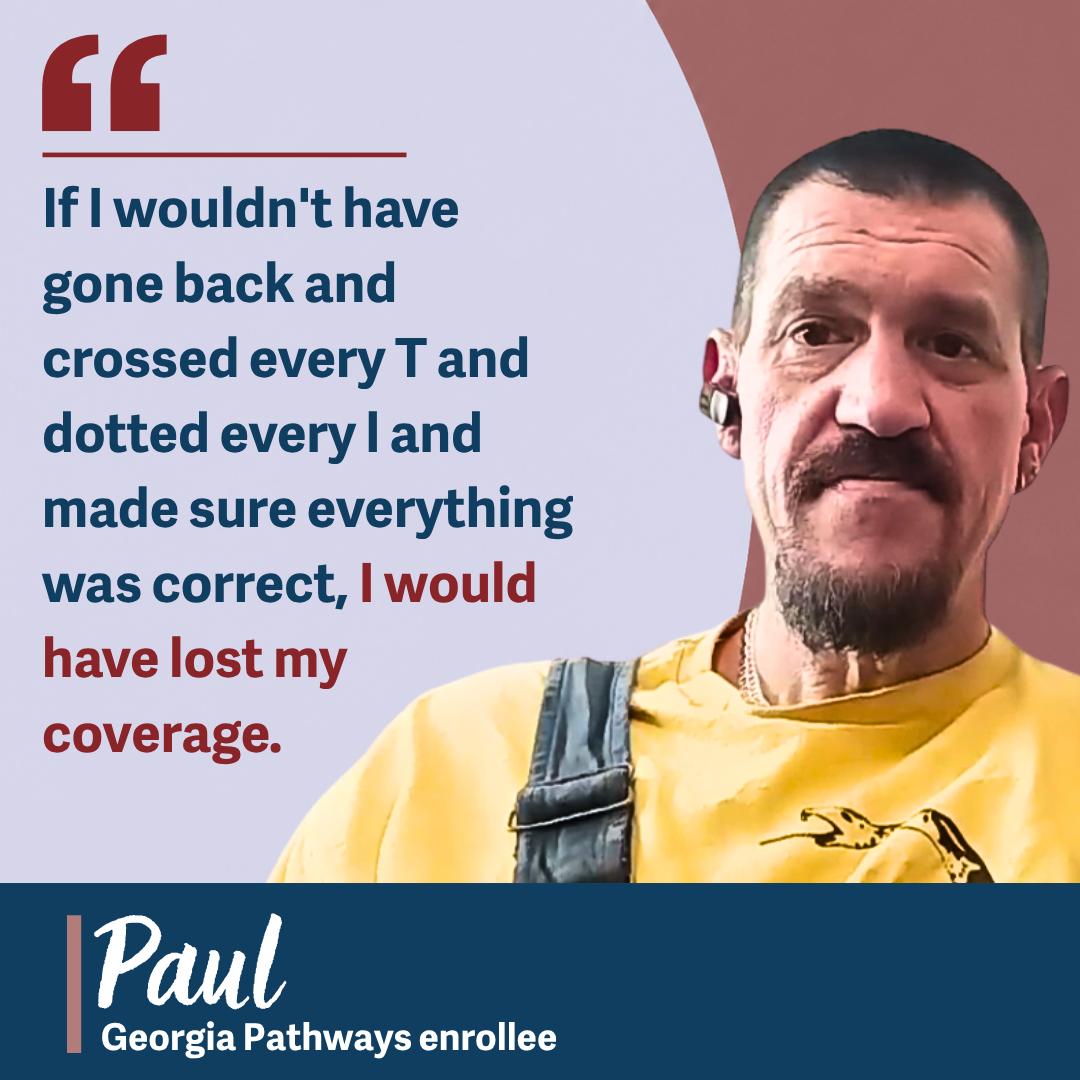
Quote from Paul Mikell about his experience navigating Georgia Pathways to Coverage

Paul Mikell knows that firsthand. As an essential worker, Paul shared his journey of enrolling in Pathways. Although he was eligible through SNAP (the Supplemental Nutrition Assistance Program, or food assistance), the process was far from easy. Even after approval, keeping his coverage meant constantly navigating confusing paperwork and reporting requirements just to prove he still qualified.

His experience reflects a pattern the data keeps confirming.

(more…)

Tags:

Your Story Can Make a Difference

Promotional graphic from Georgians for a Healthy Future and Families USA encouraging Georgians to share personal health care stories. Large text reads, “Your Story Can Help Protect Health Care in Georgia.” The graphic invites people to share experiences with Medicaid, rising insurance premiums, medical debt, or hospital closures, noting that personal stories can inform policymakers and create change. A badge highlights a September 15 submission deadline. The Georgia State Capitol appears in the background, alongside photos of four individuals representing community storytellers. Supporting text emphasizes: “Real Stories. Real People. Real Impact.” Icons and captions at the bottom explain that personal stories can influence policy, amplify voices, educate others, and help protect health care access.

Georgians for a Healthy Future is partnering with Families USA to collect and share stories from Georgians experiencing the real consequences of federal health care cuts. If Medicaid work reporting requirements, rising premiums, medical debt, or hospital closures have affected your life, we want to hear from you. Submit your interest form by September 15, 2026, and your story could reach policymakers, advocates, and the public nationwide.

(more…)

Tags:

Legislative Update: Sine Die

LEGISLATIVE UPDATE: SINE DIE

Georgia State Capitol

FY2027 Budget: The Conference Committee’s Final Deal

In the final days of Georgia’s 2026 legislative session, a conference committee made up of three House and three Senate members negotiated the final Fiscal Year 2027 (FY27) state budget after the two chambers disagreed on spending priorities across health care, workforce, and rural infrastructure. Both chambers passed the conference committee’s final FY27 budget before Sine Die on the last day of the legislative session. The FY27 budget funds the state from July 1, 2026, to June 30, 2027.

(more…)

Tags:

Legislative Update: Week 11

Georgia State Capitol

WEEK 11: WHAT THE SENATE BUDGET MEANS FOR HEALTH CARE IN GEORGIA

Last week, the Georgia Senate passed its version of the Fiscal Year 2027 (FY27) state budget. The FY27 budget funds the state from July 1, 2026, to June 30, 2027. The Senate made significant changes to the House’s version of the budget, including dramatically expanding waiver capacity for Georgians with intellectual and developmental disabilities (IDD), redistributing Medicaid provider rate increases, and scaling back several House investments in public health, workforce, and rural health infrastructure.

(more…)

Tags:

Legislative Update: Week 10

Image of the Georgia capitol

WEEK 10: COMMUNITY HEALTH WORKER CERTIFICATION BILL AWAITS FINAL PUSH

Community Health Worker

As the 2026 legislative session enters its final days, one critical workforce bill remains stalled in the Senate Health and Human Services Committee.

HB 291, which would establish Georgia’s first certification process for Community Health Workers (CHWs), crossed over to the Senate last year but has yet to receive a committee vote. With just a few legislative days remaining before Sine Die on April 2, time is running short for this important workforce investment.

CHWs play a vital role in Georgia’s health care system by bridging gaps between communities, social services, and health care providers. They go by many titles, including Patient Navigator, Community Health Navigator, and Promotora de Salud. HB 291 would create a state-approved certification process with standard training and competencies, helping CHWs do their work more effectively and sustainably.

Community Health Workers deserve professional recognition and consistent training standards. With limited time remaining in the session, members of the Senate Health and Human Services Committee need to hear that Georgians support this workforce investment.

 
Tell the Senate HHS Committee to Vote on HB 291

Here’s what you need to know about HB 291 and where it stands:

(more…)

Tags:

Legislative Update: Week 9

Image of the Georgia capitol

Week 9: What the House Budget Means for Health Care in Georgia

Last Tuesday, the Georgia House of Representatives passed its version of the Fiscal Year 2027 (FY27) state budget. The FY27 budget funds the state from July 1, 2026 to June 30, 2027. The House version builds on the Governor’s recommendations with significant new investments in Medicaid provider rates, graduate medical education, maternal and child health, and public health infrastructure.

Here is what the House version means for health care and the programs Georgians rely on:

(more…)

Tags:

Did Your Georgia Access Premium Go Up? Share Your Story Before April 2.

Share Your Story Before April 2.

Georgians for a Healthy Future is collecting stories from Georgians whose health coverage has been affected by rising Georgia Access Marketplace premiums. If your costs have gone up this year and it changed what coverage you can afford or how you use your health care, we want to hear from you.

(more…)

Tags:

Legislative Update: Week 8

Image of the Georgia capitol

Week 8: What Survived Crossover Day and What Comes Next

Crossover Day has come and gone, marking a critical turning point in the 2026 legislative session!

Friday, March 6th was the final day for bills to pass the chamber where they were introduced (the House or Senate) and move to the other chamber for consideration.

(more…)

Legislative Update: Week 7

Image of the Georgia capitol

Week 7: What the Final AY26 Budget Means for Health Care in Georgia

Last Wednesday, the House and Senate reached an agreement on the Amended Fiscal Year 2026 (AY26) state budget. The final version now goes to the Governor for his signature, after which the new spending plan will take effect.

Here is what this budget means for health care, human services, and the programs Georgians rely on:

(more…)

Tags:

Stay Connected

Sign up to receive updates from GHF!
Join

GHF In The News

Jun 16, 2026
Georgia residents have some of the highest medical debt in the country, and it could get worse
Ellen Eldridge

LISTEN: On average, Georgia has twice as much medical debt than the rest of the country, according to Georgians for a Healthy Future Executive Director Laura Colbert. GPB’s Ellen Eldridge…

Archive