LISTEN: On average, Georgia has twice as much medical debt than the rest of the country, according to Georgians for a Healthy Future Executive Director Laura Colbert. GPB’s Ellen Eldridge…
Blog
« All Blog Entries
Georgia Pathways to Coverage Is Not Reaching Enough Georgians. We Want to Hear Why.
Share Your Georgia Pathways to Coverage Experience
Georgia’s Pathways to Coverage program requires participants to document work, school, or other qualifying activities in order to gain and keep Medicaid coverage. But three years in, the numbers tell a complicated story, and the people living inside those numbers tell an even more complicated one.
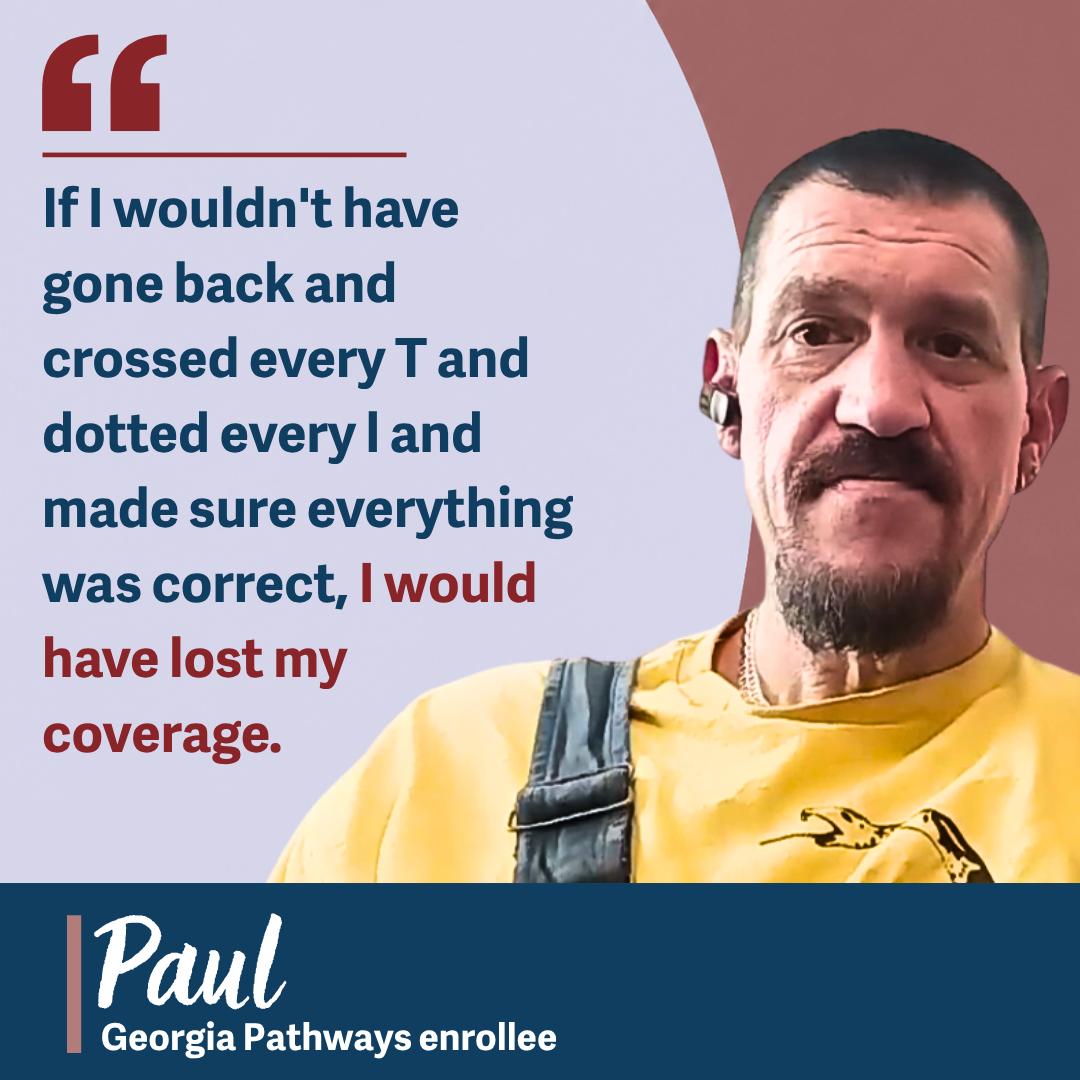
Paul Mikell knows that firsthand. As an essential worker, Paul shared his journey of enrolling in Pathways. Although he was eligible through SNAP (the Supplemental Nutrition Assistance Program, or food assistance), the process was far from easy. Even after approval, keeping his coverage meant constantly navigating confusing paperwork and reporting requirements just to prove he still qualified.
His experience reflects a pattern the data keeps confirming.
A Program Falling Short of Its Potential
As of April 30, 2026, 16,782 Georgians are actively enrolled in Pathways to Coverage, a number that sounds significant until you consider the scale of the need. About one in every three of Georgia’s low-income adults remains uninsured, and for many of them, Pathways to Coverage has not been the on-ramp it was promoted to be.
The barriers start at the application stage. According to an analysis of the program by the Georgia Budget and Policy Institute, about 60 percent of Pathways to Coverage applications were denied in the first two years. Failure to meet the minimum required work or activity hours accounted for 11 percent of those denials. Applicants may also struggle with documenting qualifying activities, gathering required paperwork, understanding program requirements, or navigating the online application process.
For those who do get approved, staying enrolled is another challenge. During the renewal period, a majority, 64 percent, of disenrolled Georgians lost coverage because they did not return their renewal forms. For some enrollees, maintaining coverage means keeping up with reporting requirements, responding to requests for information, and meeting renewal deadlines while balancing work, school, caregiving, and other responsibilities.
The program’s reach has also been uneven across the state. Almost half of Georgia’s counties still had 25 or fewer residents who had ever been covered under Pathways after two years of enrollment.
The cost picture raises questions about efficiency. Through June 2025, the Pathways to Coverage program cost taxpayers about $110 million. Less than a third of every dollar spent went toward actual health care benefits, like doctor visits and prescription refills.
Georgia Is Not Alone for Long
Georgia has been the only state in the country operating a Medicaid work reporting requirement, but that is changing. Thanks to HR 1, the federal government is now requiring all states to adopt similar requirements, making Georgia’s experience with Pathways a preview of what millions of people enrolled in Medicaid across the country could soon face. Starting in January 2027, Georgia will also need to align its own program more closely with the new federal standard, adding yet another layer of complexity for enrollees already navigating a demanding system.
What the Numbers Cannot Tell Us
Data points can describe the scope of the problem, but they cannot capture what it feels like to live it. They cannot tell the story of a missed notice, a confusing requirement, a document that never arrives, or hours spent trying to upload paperwork or reach someone who can help. They cannot capture the challenge of meeting reporting requirements while balancing work, school, caregiving, transportation barriers, or unreliable internet access.
And they cannot measure the toll that navigating a complicated system can take on a person’s time, finances, and peace of mind.
That is where your story comes in.
Georgians for a Healthy Future is collecting stories from people who have navigated Georgia Pathways to Coverage. We want to hear what the work reporting requirements mean for your daily life, and what it has taken to hold onto the coverage you have earned. As other states prepare to follow Georgia’s lead, your experience can help shape how these programs are designed and implemented across the country.
Who Should Share Their Story?
We are looking for Georgians who:
- Are currently enrolled in Georgia Pathways to Coverage
- If you are an adult who is working, in school, or participating in another qualifying activity and receive Medicaid coverage (sometimes called “medical assistance”), you may be enrolled in Pathways.
- Have tried to enroll in Pathways and faced barriers or denials such as missing paperwork, difficulty documenting qualifying activities, technical issues, or confusion about eligibility requirements
- Have lost Pathways coverage and are working to get it back after missing a deadline, renewal notice, or documentation request
- Have navigated the work reporting requirements while managing work, school, caregiving, transportation challenges, unreliable internet access, or other responsibilities
We especially encourage people in rural communities to share their experiences.
Your story matters, even if you think it doesn’t. If Pathways has been part of your life in any way, we want to hear about it.
Know someone who has a Pathways story? Share this post with them, or share it on social media. Every story helps build a clearer picture of what this program means for Georgians and what it could mean for millions of people across the country.
Have questions about sharing your story? Reach out to Lois Hairston at lois@healthyfuturega.org.
Stay Connected
Sign up to receive updates from GHF!
GHF In The News
Jun 16, 2026
Georgia residents have some of the highest medical debt in the country, and it could get worse
Archive
- September 2026
- July 2026
- June 2026
- April 2026
- March 2026
- February 2026
- January 2026
- November 2025
- October 2025
- September 2025
- August 2025
- July 2025
- June 2025
- May 2025
- April 2025
- March 2025
- February 2025
- January 2025
- October 2024
- May 2024
- April 2024
- March 2024
- February 2024
- January 2024
- December 2023
- October 2023
- July 2023
- April 2023
- March 2023
- February 2023
- January 2023
- December 2022
- October 2022
- September 2022
- August 2022
- June 2022
- April 2022
- March 2022
- February 2022
- January 2022
- December 2021
- November 2021
- October 2021
- September 2021
- August 2021
- June 2021
- May 2021
- April 2021
- March 2021
- February 2021
- January 2021
- December 2020
- November 2020
- October 2020
- September 2020
- July 2020
- June 2020
- May 2020
- April 2020
- March 2020
- February 2020
- January 2020
- December 2019
- November 2019
- October 2019
- September 2019
- August 2019
- July 2019
- May 2019
- April 2019
- March 2019
- February 2019
- January 2019
- December 2018
- November 2018
- October 2018
- September 2018
- August 2018
- July 2018
- June 2018
- May 2018
- April 2018
- March 2018
- February 2018
- January 2018
- December 2017
- November 2017
- October 2017
- September 2017
- August 2017
- July 2017
- June 2017
- May 2017
- April 2017
- March 2017
- February 2017
- January 2017
- December 2016
- November 2016
- October 2016
- September 2016
- August 2016
- July 2016
- June 2016
- May 2016
- April 2016
- March 2016
- February 2016
- January 2016
- December 2015
- November 2015
- October 2015
- September 2015
- August 2015
- July 2015
- June 2015
- May 2015
- April 2015
- March 2015
- February 2015
- January 2015
- December 2014
- November 2014
- October 2014
- September 2014
- July 2014
- May 2014
- March 2014
- January 2014
- December 2013
- October 2013
- September 2013
- August 2013
- July 2013
- June 2013
- May 2013
- April 2013
- March 2013
- February 2013
- January 2013
- November 2012
- October 2012
- September 2012
- July 2012
- June 2012
- May 2012
- April 2012
- March 2012
- February 2012
- January 2012
- December 2011
- November 2011
- October 2011
- September 2011
- August 2011
- July 2011
- June 2011
- April 2011
- March 2011
- February 2011
- January 2011
- December 2010
- November 2010
- October 2010
- September 2010
- August 2010
- July 2010
- June 2010
- May 2010
- April 2010
- March 2010
- February 2010
- January 2010
- December 2009
- November 2009
- October 2009