
1. Home
  2. >
  3. Medicaid

Tag: Medicaid

GHF’s Comments to DCH on the New Medicaid Work Requirement

GHF's public comment flags gaps in health exemptions and public outreach in Georgia's new Medicaid work requirement rule

Earlier this month, GHF submitted comments to the Georgia Department of Community Health on the state’s plan to implement Medicaid’s new work reporting requirement under H.R. 1.

(more…)

Tags:

Georgia Pathways to Coverage Is Not Reaching Enough Georgians. We Want to Hear Why.

Share Your Georgia Pathways to Coverage Experience

Georgia’s Pathways to Coverage program requires participants to document work, school, or other qualifying activities in order to gain and keep Medicaid coverage. But three years in, the numbers tell a complicated story, and the people living inside those numbers tell an even more complicated one.

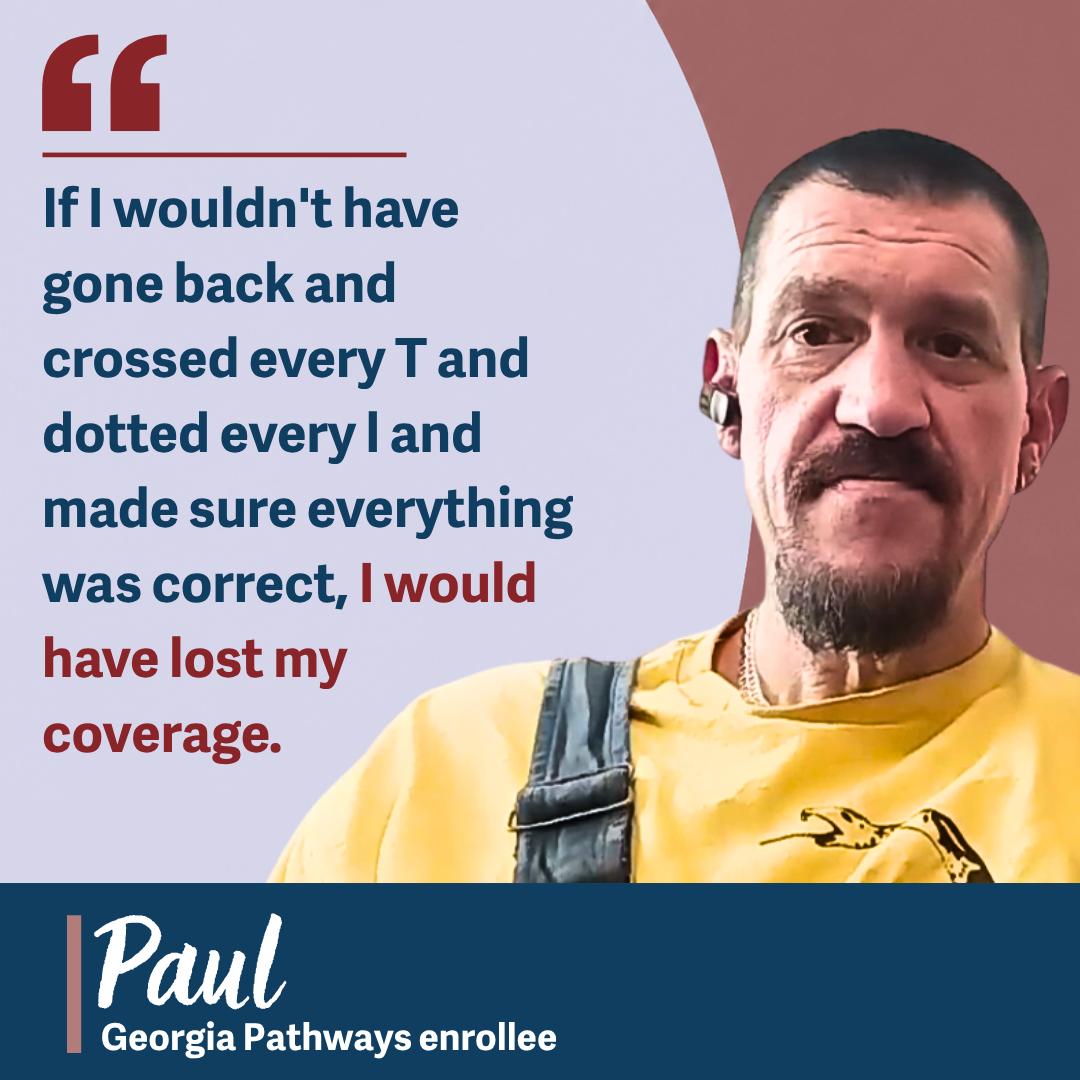
Quote from Paul Mikell about his experience navigating Georgia Pathways to Coverage

Paul Mikell knows that firsthand. As an essential worker, Paul shared his journey of enrolling in Pathways. Although he was eligible through SNAP (the Supplemental Nutrition Assistance Program, or food assistance), the process was far from easy. Even after approval, keeping his coverage meant constantly navigating confusing paperwork and reporting requirements just to prove he still qualified.

His experience reflects a pattern the data keeps confirming.

(more…)

Tags:

Your Story Can Make a Difference

Promotional graphic from Georgians for a Healthy Future and Families USA encouraging Georgians to share personal health care stories. Large text reads, “Your Story Can Help Protect Health Care in Georgia.” The graphic invites people to share experiences with Medicaid, rising insurance premiums, medical debt, or hospital closures, noting that personal stories can inform policymakers and create change. A badge highlights a September 15 submission deadline. The Georgia State Capitol appears in the background, alongside photos of four individuals representing community storytellers. Supporting text emphasizes: “Real Stories. Real People. Real Impact.” Icons and captions at the bottom explain that personal stories can influence policy, amplify voices, educate others, and help protect health care access.

Georgians for a Healthy Future is partnering with Families USA to collect and share stories from Georgians experiencing the real consequences of federal health care cuts. If Medicaid work reporting requirements, rising premiums, medical debt, or hospital closures have affected your life, we want to hear from you. Submit your interest form by September 15, 2026, and your story could reach policymakers, advocates, and the public nationwide.

(more…)

Tags:

Legislative Update: Week 11

Georgia State Capitol

WEEK 11: WHAT THE SENATE BUDGET MEANS FOR HEALTH CARE IN GEORGIA

Last week, the Georgia Senate passed its version of the Fiscal Year 2027 (FY27) state budget. The FY27 budget funds the state from July 1, 2026, to June 30, 2027. The Senate made significant changes to the House’s version of the budget, including dramatically expanding waiver capacity for Georgians with intellectual and developmental disabilities (IDD), redistributing Medicaid provider rate increases, and scaling back several House investments in public health, workforce, and rural health infrastructure.

(more…)

Tags:

Legislative Update: Week 10

Image of the Georgia capitol

WEEK 10: COMMUNITY HEALTH WORKER CERTIFICATION BILL AWAITS FINAL PUSH

Community Health Worker

As the 2026 legislative session enters its final days, one critical workforce bill remains stalled in the Senate Health and Human Services Committee.

HB 291, which would establish Georgia’s first certification process for Community Health Workers (CHWs), crossed over to the Senate last year but has yet to receive a committee vote. With just a few legislative days remaining before Sine Die on April 2, time is running short for this important workforce investment.

CHWs play a vital role in Georgia’s health care system by bridging gaps between communities, social services, and health care providers. They go by many titles, including Patient Navigator, Community Health Navigator, and Promotora de Salud. HB 291 would create a state-approved certification process with standard training and competencies, helping CHWs do their work more effectively and sustainably.

Community Health Workers deserve professional recognition and consistent training standards. With limited time remaining in the session, members of the Senate Health and Human Services Committee need to hear that Georgians support this workforce investment.

 
Tell the Senate HHS Committee to Vote on HB 291

Here’s what you need to know about HB 291 and where it stands:

(more…)

Tags:

Legislative Update: Week 9

Image of the Georgia capitol

Week 9: What the House Budget Means for Health Care in Georgia

Last Tuesday, the Georgia House of Representatives passed its version of the Fiscal Year 2027 (FY27) state budget. The FY27 budget funds the state from July 1, 2026 to June 30, 2027. The House version builds on the Governor’s recommendations with significant new investments in Medicaid provider rates, graduate medical education, maternal and child health, and public health infrastructure.

Here is what the House version means for health care and the programs Georgians rely on:

(more…)

Tags:

Legislative Update: Week 7

Image of the Georgia capitol

Week 7: What the Final AY26 Budget Means for Health Care in Georgia

Last Wednesday, the House and Senate reached an agreement on the Amended Fiscal Year 2026 (AY26) state budget. The final version now goes to the Governor for his signature, after which the new spending plan will take effect.

Here is what this budget means for health care, human services, and the programs Georgians rely on:

(more…)

Tags:

What Are Higher Health Insurance Costs Doing to Your Family?

What Are Higher Health Insurance Costs Doing to Your Family?

If your health insurance costs went up this year, you are not alone.

Thousands of Georgians are paying more for their Georgia Access coverage right now. Some have seen their monthly premiums double or even triple. Others have had to choose cheaper plans with higher deductibles or drop coverage completely. These aren’t just numbers on a spreadsheet. They represent real families making difficult decisions about their health and financial security. Are you one of these Georgians?

(more…)

Tags:

Love in motion: Honoring Georgia’s family caregivers this November

Georgia’s family caregivers give their time, energy, and hearts to care for loved ones every day. This National Family Caregivers Month, Georgians for a Healthy Future celebrates their stories and calls for stronger policies to support them.

November is National Family Caregivers Month, a time to honor the Georgians who care for loved ones, neighbors, and community members with strength and compassion. Every day, family caregivers perform acts of love in motion—managing medications, offering emotional support, navigating health systems, and keeping households running.

At Georgians for a Healthy Future (GHF), we’re proud to support caregivers through our Caregivers Advisory Group, which is dedicated to raising awareness and expanding outreach to caregivers of all ages, in both paid and unpaid roles. This group helps shape policies that ensure caregivers are recognized, supported, and connected to vital resources.

(more…)

Tags:

Updated: Why ACA Premiums May Soon Become Less Affordable and What an Expiring Tax Credit Could Mean for Georgia Families

Millions of Georgians Could Face Big Increases in Health Insurance Costs—Here’s What You Need to Know
Young people spitting at table and looking at laptop

Updated April 2026: The Enhanced Premium Tax Credits Have Expired

Congress did not act to extend the enhanced premium tax credits (ePTCs) before they expired on December 31, 2025. The impact on Georgia families is already taking shape:

  • Enrollment is down. Initial 2026 plan year data shows Georgia Access enrollment dropped by roughly 200,000 people compared to 2025, a 14% decrease.
  • Premiums have surged. For Georgians who kept their coverage, out-of-pocket premium costs rose by an average of 114%, with the average net monthly premium roughly doubling from $69 to $148.
  • More coverage losses are projected. An estimated 460,000 Georgians are expected to lose Georgia Access coverage and become uninsured between 2025 and 2034 because of the ePTC expiration combined with new restrictions in the federal “One Big Beautiful Bill Act” (H.R. 1).
  • Georgia’s health care system will feel it. Health care providers are projected to lose $25 billion in revenue over that same period, deepening strain on rural hospitals and communities already facing provider shortages.

Georgia is not without options. State leaders can act to soften these impacts through targeted premium assistance, reinsurance program adjustments, cost-sharing support, stronger consumer assistance, and special enrollment flexibilities.

Our new policy brief, The Road Ahead for Georgia Access: Navigating the End of Enhanced Subsidies and the Impacts of Federal Policy Shifts, lays out what is happening, who is most affected, and the policy tools available to Georgia leaders right now.

▶ Read the full policy brief

Note: The blog content below was written before the enhanced premium tax credits expired. For the most current information and analysis, please refer to the policy brief linked above.

August 2025: Enhanced Affordable Care Act premium tax credits (ePTCs) still expire on December 31, 2025, unless Congress acts. In 2025, Georgia Access enrolled over 1.5 million Georgians, 93% of whom depend on these subsidies to make health coverage affordable. Without an extension, premiums in Georgia are projected to jump over 75% on average, and most 2026 insurer filings already assume the credits will lapse. A typical example: a 60-year-old couple earning about $85,000 would pay roughly $18,000 more per year if the ePTCs disappear. The premium increases resulting from the expiration of the ePTCs could cause about 340,000 more Georgians to become uninsured. In short: swift Congressional action to extend the ePTCs—ideally before rate finalization—would prevent sharp premium spikes for Georgia families and avert significant coverage losses. 

See how costs could rise in your Congressional district or use the calculator to estimate cost increases based on your income information — then contact your members of Congress today and tell them to extend the enhanced premium tax credits to keep health care affordable for Georgia families.

(more…)

Tags:

Stay Connected

Sign up to receive updates from GHF!
Join

GHF In The News

Jun 16, 2026
Georgia residents have some of the highest medical debt in the country, and it could get worse
Ellen Eldridge

LISTEN: On average, Georgia has twice as much medical debt than the rest of the country, according to Georgians for a Healthy Future Executive Director Laura Colbert. GPB’s Ellen Eldridge…

Archive