Peach Pulse Archive 2026

What’s Inside This Month’s Peach Pulse
Here’s what’s inside this month’s Peach Pulse:
- Thank You for Getting Georgia Covered: The Getting Georgia Covered campaign wrapped on May 19. Check out the highlights and see how you can support GHF’s year-round enrollment work.
- Youth Mental Health: What Is EPSDT? More than 1.2 million Georgia youth have access to free mental health screenings and treatment through Medicaid. Watch our new video to learn more.
- Governor Kemp’s Final Say on 2026 Health Care Priorities: The legislative session is over and the Governor has signed, vetoed, and withheld. Get the full breakdown on what passed and what got cut from the budget.
- Georgia’s Uninsured Crisis Is a Mental Health Issue: In a new guest blog for Cover Georgia, Dr. Glenda Wrenn Gordon writes about the coverage gap as a mental health crisis and what Medicaid expansion would change. Read the blog.
- GHF’s 2025 Annual Report: A look back at a year defined by what we protected, and what we built for what comes next. Read the report.
- GHF in the News: Recent coverage from Georgia Public Broadcasting, WABE, Georgia Recorder, and more.
Thank You for Getting Georgia Covered

For one week, GHF asked Georgians to invest in programs that matter: the enrollment assistance program, consumer education, and health policy advocacy that helps real families find and keep coverage. You showed up and made a difference. The Getting Georgia Covered campaign wrapped up on May 19, and because of you, it finished with strong momentum and meaningful impact. We raised over $7,500 during the campaign!
Every dollar raised goes toward the work that happens year-round: answering calls from Georgians who cannot make sense of their Medicaid renewal letters, walking families through plan options during Open Enrollment, and making sure policymakers hear from the people most affected by their decisions.
We are grateful for every gift, every share, and every person who helped spread the word. This campaign reminded us why we do this work and who we do it for.
If you did not get a chance to give during the campaign, it is not too late. Your support helps us stay ready for every Georgian who calls.
Your Support Still Makes a Difference
Read, Reflect, Act: GHF’s Latest Publications & Resources
Youth Mental Health: What Is EPSDT?

Georgia’s children are facing a mental health crisis, and many families do not know that help may already be available. Early and Periodic Screening, Diagnosis and Treatment (EPSDT) provides preventive mental health screenings and treatment free of charge for children and youth enrolled in Medicaid.
More than 1.2 million young people in Georgia have access to this benefit, which includes physical, dental, vision, and mental health care. One in four children in Georgia has emotional or behavioral health issues, but care remains out of reach for many. Georgia ranks 48th nationwide for access to mental health care. EPSDT helps families identify issues early through preventive screening and access treatment when needed.
Unlike private insurance, EPSDT has no cap on treatment, so families do not have to worry about coverage running out after a set number of therapy visits or prescriptions.
“When a child struggles with mental health, the entire family really does feel it. Access to early care can change the trajectory for both the child and the caregivers providing the support.”
Latoya Palmer-Addy, CEO of Parent to Parent of Georgia
Governor Kemp’s Final Say on 2026 Health Care Priorities
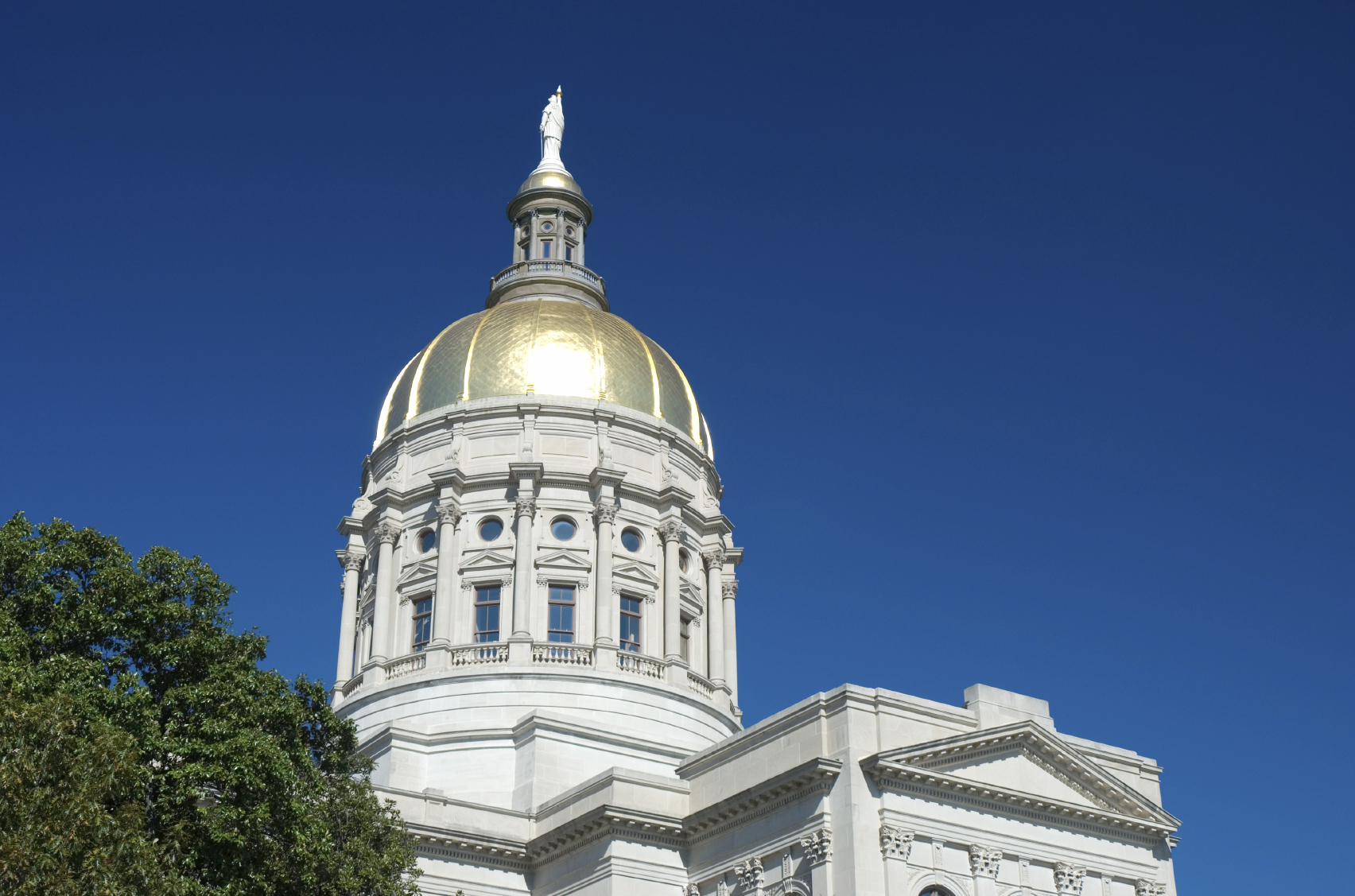
The 2026 Georgia General Assembly session is officially closed, and Governor Kemp has had his say on the health bills and the budget that came out of it.
Bills GHF Tracked That Passed the General Assembly
GHF tracked and advocated around a wide range of legislation during the 2026 session. Below are six bills that we followed that ultimately reached the Governor’s desk. Five were signed into law. One, HB 1192, was vetoed by the Governor.
| Bill | What It Does |
|---|---|
| HB 506 signed into law |
Extends Georgia’s surprise billing protections to emergency ground ambulance rides, to help Georgians avoid large, unexpected charges for out-of-network ambulance transportation. |
| SB 195 signed into law |
Allows pharmacists to dispense PrEP (pre-exposure prophylaxis), a highly effective HIV prevention medication, without a doctor’s prescription. |
| HB 1238 signed into law |
Directs the state to seek Medicaid coverage for respite care for families caring for children with serious behavioral health needs. |
| SB 428 signed into law |
Pursues Medicaid coverage for community-based mental health services that help adults stay stable and avoid crisis. |
| SB 427 signed into law |
Opens a pathway for internationally trained physicians to practice in underserved areas. |
| HB 1192 vetoed |
Would have required two state health agencies to keep program funds in separate accounts and report on them annually. |
The Budget: Governor Rejects $75.8 Million in Approved Health Funding
During this year’s budgetary approval process, Governor Kemp disregarded more than $344 million in the FY27 budget passed by the General Assembly, including roughly $75.8 million in health spending.1 (A budget “disregard” means that a specific line in the state budget can’t be spent.) According to the Governor, these disregards were necessary to partially offset the $1.2 billion cut to state revenue caused by the income tax cut he signed into law the day before.
The cuts to health care touch disability services, Medicaid rates, rural health, workforce, and public health. Here is a breakdown of the largest reductions to health funding:
| Health Investment | What the General Assembly Approved | Governor’s Action | State Funds Affected |
|---|---|---|---|
| NOW/COMP waiver slots | 500 new slots for Georgians with intellectual and developmental disabilities | Reduced to 100 slots; also cut new funding for waiver administration and family support | $9.7M |
| Medicaid provider rates | 22 rate increases across ABD, Low-Income Medicaid, and PeachCare (autism parity, primary care, dental, psychiatric residential, FQHC, nursing facility, air ambulance, and more) | Withheld every Medicaid rate increase | ~$48M |
| Rural health | Rural hospital solvency evaluation, emergency preparedness grants, behavioral health stabilization at trauma centers | Withheld | $7.4M |
| Graduate medical education | 124 new primary care residency slots, plus new fellowships and a family medicine start-up | Cut to 105 slots; withheld remaining workforce funding | ~$4.2M |
| Behavioral health | School behavioral health training (HB 268) and the loan repayment program for behavioral health professionals (HB 1013) | Withheld or redirected | $4.5M |
| Public health | Sickle cell services, colorectal cancer screenings, maternal telehealth, Georgia Poison Center | Withheld | ~$4M |
These cuts have real consequences for Georgians. They will mean people with disabilities continue to wait for a waiver slot so they can live with support and dignity in their communities. Consumers who already struggle to find a doctor or dentist who takes Medicaid are unlikely to see that get easier. Rural communities working to keep their hospitals afloat will have fewer resources to ensure care remains available and the hospital doors stay open. Georgia’s health care infrastructure depends on the providers, facilities, and workforce these investments were meant to strengthen.
1 Kanso, Daniel, and Danny Kanso. 2026. “Governor Kemp Unilaterally Issues $344 Million in Spending Cuts to Fund Tax Cuts for Corporations, High Income Earners.” Georgia Budget and Policy Institute. https://gbpi.org/governor-kemp-unilaterally-issues-344-million-in-spending-cuts-to-fund-tax-cuts-for-corporations-high-income-earners/
Georgia’s Uninsured Crisis Is a Mental Health Issue

Hundreds of thousands of Georgians fall into Georgia’s coverage gap, earning too little to qualify for marketplace subsidies but ineligible for Medicaid under current state rules. Georgia ranks 46th in the nation for access to mental health care, and nearly 35 percent of adults experiencing mental distress in Georgia could not see a doctor because of cost.
In 40 states that have expanded Medicaid, the uninsured rate averages 7.6 percent. In non-expansion states like Georgia, it is nearly double: 14.1 percent. The evidence on what expansion does for mental health is clear: higher treatment rates for depression, anxiety, and trauma, more consistent access to medication, and more than 1,800 suicides prevented in expansion states between 2015 and 2018.
In a guest blog for Cover Georgia, Dr. Glenda Wrenn Gordon writes that for the hundreds of thousands of Georgians without health insurance, Mental Health Awareness Month is not about awareness. It is about access.
“Georgia already has the evidence, the resources, and the federal support to act. What remains uncertain is whether our state leaders will find the political courage to do so.”
Dr. Glenda Wrenn Gordon
A Healthier Future, Built Together: 2025 Annual Report
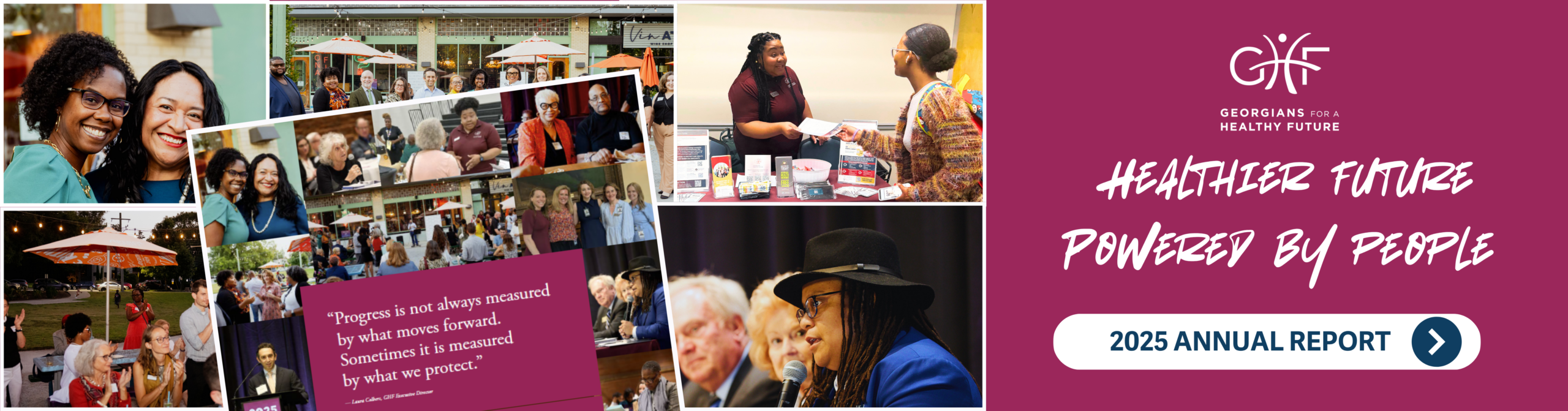
Last year brought significant challenges for Georgians who rely on affordable health care. GHF’s 2025 Annual Report captures how we responded: by protecting access to coverage, amplifying the voices of people most affected, and building the foundation for what comes next.
A few highlights from the year:
- 8,000+ Georgians reached with educational information about health coverage and health policies
- 125 households enrolled in health coverage
- 60+ media interviews and features
- 22 state bills or policies measurably influenced
- 924 constituent contacts with state leaders
- 23 consumer stories collected and prepared for sharing
Read the full report to see what your support made possible.
GHF in the News
Catch up on recent media coverage featuring GHF’s work, team, and storytellers:
- Georgia Public Broadcasting | April 29, 2026:
Georgia Today: Georgia reacts to SCOTUS ruling; Burn ban still in place; New dental college - WABE | May 7, 2026:
Lower-income, sicker Georgians hit hardest by ACA enrollment drop - Georgia Recorder | May 13, 2026:
Georgia Democrats are still pledging to expand Medicaid. But in 2026, it’s more complicated. - WABE / Georgia Recorder | May 18, 2026:
Democratic challengers say Georgia commissioner should do more to hold insurers accountable - Georgia Public Broadcasting | May 22, 2026:
State disability support, Medicaid spending hit the most by Kemp vetoes
Your gift tracks the bills, publishes the research, and amplifies the voices Georgia lawmakers need to hear.
MORE >