Is It Worth $10 to Save a Life?

By Benjamin Nanes

This November, Georgians will vote on adding a $10 fee to vehicle registrations, to be directed toward trauma care.  Or is it a tax?  If you listen to the pundits and politicians, the fee versus tax debate defines the referendum.  But they’re wrong; nothing could be less relevant.  Georgia needs dedicated funding for a trauma care system that will save lives and help the state’s economy, not a petty debate over what constitutes a “fee” or a “tax.”  The question is simple.  Is it worth $10 to save a life?  The answer should be simple too. Read more →

<

Georgia: $375 Million in the Red

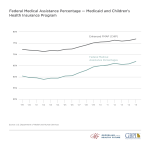
Thursday, July 1, was the start of Georgia’s 2011 State Fiscal Year, and we began already $375 million behind. The state legislative session which ended on April 29 saw dramatic budget cuts impacting education and other services for children and families. To add insult to injury, Georgia suffered yet another blow resulting from failure of the U.S. Senate to move forward the Federal Jobs Bill, which in part included a provision that would extend an enhanced FMAP to states for an additional 6 months. FMAP, which stands for Federal Medical Assistance Percentages, is a break down of how many Federal dollars Georgia receives to help pay for our state Medicaid program. Given the high unemployment rate and dire financial situations that families in the U.S. were facing, in last year’s Federal Stimulus Bill, Congress instituted an increase in Federal match dollars to all states to help keep their respective Medicaid programs afloat.


Read more →

<

What Happened in 40 Days?

The 2010 Legislative Session is officially over in Georgia.  We want to provide you a wrap-up of key pieces of health-related legislation and what they mean for Georgians across the state.


  • HB 307 (which ultimately was attached to HB 1055) imposes a 1.45% bed tax on hospitals.  It is estimated that HB 1055 will generate $300 million for the state.
  • HB 317 (which was attached to HB 411) states that Georgians cannot be compelled to “participate in any health care system,” and that the purchase or sale of health insurance products and/or direct healthcare services could not be prohibited.  This language is intended to exempt Georgians from the individual mandate to purchase health insurance that is included in the recently enacted national health reform law. Because federal law predominates, HB 317 is not expected to have much practical impact.
  • HB 321 now brings Third Party Administrators under Georgia’s Prompt Pay statues, creating a more attractive practice environment for physicians within Georgia and creating more physician choice for Georgia’s consumers and effectively lowering costs through increased competition.  The statute ensures that insurance providers pay medical claims within 15 to 18 working days.
  • HB 866 permits state matching grants to organizations for doctors who move to rural areas.  This legislation serves to enhance recruitment efforts in bringing physicians and specialists to underserved areas within the state thus allowing for greater health care options statewide.
  • HB 1040 allows unlicensed caretakers to perform some home health care activities.  This will enable trained, unlicensed care-partners or assistance personnel to provide some health maintenance activities under informed consent for people with disabilities and the written order of a physician, eliminating the ban on such services within the Nurse Practice Act and allowing or more affordable in-home health options.
  • HB 1268 extends the 65% federal COBRA premium subsidy for people laid off by small firms.
  • HB 1407 provides for a single administrator for dental services for Medicaid recipients and PeachCare for Kids participants thus effectively removing the administrative “middle man” in accessing dental care.
  • SB 316 will make Medigap policies available to Georgians who are living with a disability and receiving Medicare benefits, allowing for fewer chronically ill Georgians to be stuck within the Medicare donut hole or avoid other underpayment issues.
  • SB 360 and HB 23 deal with cellular phone use while driving.  The Senate bill bans texting by all drivers and the House bill bans class D drivers, mostly teenagers, from talking on their cell phones while on the road.
  • SB 367 expands the list of persons who may consent to treatment on behalf of another and provides for medical consent guardians.
  • SB 458 will require pickup drivers to join the rest of the state’s motorists in wearing seat belts. Pickups used on farms and other agricultural jobs are exempt.
  • SR 277 asks voters to approve a $10 fee for license plates to fund trauma services.


Two bills that we closely monitored throughout the Legislative Session, SB 407 and HB 1184, ultimately did not pass. We had major concerns about the impact of these bills on Georgia’s consumers, as they would have circumvented essential health insurance benefit mandates and eroded consumer protections for health care consumers by authorizing out-of-state insurers to sell health insurance plans to Georgians.


One issue that we were following throughout the session, the tobacco tax increase, failed to make it through in the final hours of session.  Despite being a win for public health, a win for tobacco prevention and a win for the state coffers, the tobacco tax was left behind for the year.  Hopefully next year it will be back on the table for negotiation.

As for the budget:

On the 40th day of the session, the FY 2011 budget was adopted. The Medicaid and PeachCare programs were largely protected from cuts because the state is operating under maintenance of eligibility requirements tied to the enhanced rate of federal matching funds (FMAP) Georgia is receiving from the federal government as part of the American Recovery and Reinvestment Act. However, the state budget does include increases to PeachCare premiums. Outside the Medicaid and PeachCare programs, there were other health care budget cuts, including cuts to health department grant-in-aid, Babies Born Healthy prenatal care, and Area Health Education Centers. For a more detailed breakdown of the budget and its implications on health care, please see the Georgia Budget and Policy Institute’s reports.

Looking Ahead:

Though the session is over, the hard work is far from over.  Over the next couple of months Georgians for a Healthy Future will be monitoring the implementation of the new national health reform law to ensure that Georgia is prepared to meet the needs of its citizens.  We will continue to keep you updated on issues that affect the health and welfare of all Georgians and we will look to you for support as we forge ahead.
<
More than 1.6 million Georgians are uninsured.Source: Georgia Health Policy Center
Health insurance premiums grew 6.4x faster than earnings over the past decade.Source: Families USA
Georgia’s infant mortality rate is among the worst in the nation.Source: KidsCount
Georgia ranks in the bottom quartile of states on overall quality.Source: New American Foundation
More than 1 million Georgians don't see a doctor due to the cost.Source: BRFSS data
Millions of Georgians are at least two hours away from trauma care.Source: GA Statewide Trauma Action Team

Contact GHF

place

100 Edgewood Avenue
Suite 815
Atlanta, GA 30303

Phone: 404-567-5016
Fax: 404-935-9885
E-Mail: info@healthyfuturega.org

Connect on Facebook

Connect on Twitter

twitter
© 2009 Georgians For a Healthy Future | All Rights Reserved