Legislative Recap

The 2013 Georgia Legislative Session has ended. The 2014 state budget and dozens of bills now go to Governor Deal for his signature or veto (the governor does have the authority to line-item veto parts of the state budget). Bills that did not pass this year are still viable in the 2014 Legislative Session, which will be the second year of a two-year session. Below is a summary of bills that passed the General Assembly this year that could impact health care consumers. For a complete rundown of how health care-related legislation fared, see Georgia Health News’s recap.


Legislation that could impact Medicaid and PeachCare beneficiaries


The final 2014 budget eliminated proposed rate cuts for health care providers (a 0.74% rate cut had been proposed for non-primary care providers within Medicaid and PeachCare for Kids), eliminated a proposed coding change that would have resulted in cuts for certain providers, and included funds for enrollment growth in Medicaid. This is good news for access to health care services; however, Medicaid, PeachCare, and other public health programs have sustained deep budget cuts in recent years. In future years, if we are to improve the state’s health, additional investments in public health and health care delivery will be needed.


HR 107 would create a joint study committee on Medicaid reform that would study current Medicaid policies and procedures, models in other states, and other aspects of the Medicaid program and report to the General Assembly and the Governor by December 31, 2013 with recommendations. HR 107 passed both the House and the Senate.


SB 62 would create a Federal and State Funded Health Care Financing Programs Overview Committee, a joint committee of the General Assembly. SB 62 has passed both the House and the Senate.


SB 24, which would authorize the Department of Community Health to levy a fee on hospitals to continue drawing down federal funds to support Medicaid and PeachCare for Kids, was passed by both the House and Senate and was signed into law by the Governor back in February. The current hospital fee had been set to expire on June 30, 2013. The renewal of the fee was essential to ensuring Medicaid and PeachCare’s solvency and preserving access to hospital care in Georgia.


Legislation impacting health insurance consumer protections and access to insurance


SB 236 would require insurance companies to send concurrently with any statements sent to consumers that provide notice of premium increases an estimate of the portion of any premium increase that is due to the Affordable Care Act. How this is determined would be left to insurance companies to calculate, and they would not have to disclose their methodology. There would also be no requirement to present information about any other factors leading to premium increases or to notify consumers about available tax credits that may more than offset premium increases or about any cost savings or benefit enhancements they are receiving as a result of the Affordable Care Act. As such, this bill would result in consumers receiving incomplete and potentially misleading information.  SB 236 has passed both the House and the Senate.




HB 198 would require licensing, certification, and training for health benefit exchange navigators and would restrict their ability to assist consumers. While ensuring that consumers receive accurate information from navigators about their health insurance options and protecting consumers is an important goal shared by Georgians for a Healthy Future, HB 198’s restrictive language and potentially duplicative training requirements could deter community-focused nonprofits, whose participation in the navigator program will be essential in reaching vulnerable populations who have historically faced barriers to enrolling in health insurance, from becoming navigators or from providing appropriate consumer assistance. Georgians for a Healthy Future looks forward to working with policymakers to ensure this bill is implemented in a manner that minimizes duplication and encourages participation from community-focused nonprofit organizations. HB 198 has passed both the House and the Senate.


HB 389 would allow insurance companies to terminate, cancel, or non-renew conversion policies or any health insurance policies offered through the health insurance assignment system when guaranteed issue becomes available (with a 90-day cancellation period and a 90-day open enrollment period into new health insurance options made available through the Affordable Care Act). HB 389 has passed both the House and the Senate.


<

The Affordable Care Act Turns 3!

ACA3On March 23, the nation’s landmark health care reform legislation, the Affordable Care Act (ACA), turned 3 years old.  Though it has only been three years since its passage and while we are still months away from some of the law’s most prominent features taking effect (i.e. health insurance marketplace, individual mandate, etc.), millions of people have already taken advantage of some of the law’s provisions, including many Georgians. 


Here is how the ACA has affected Georgia:

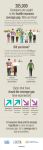
  • Young adults up to age 26 can now remain on their parent’s health plans.  As of December 2011, 123,000 young adults in Georgia gained insurance coverage as a result the health care law.
  • Prescription drug coverage for Medicare beneficiaries is now more affordable through the gradual closing of the “donut hole.”  In Georgia, people with Medicare saved over $161.9 million on prescription drugs since the law’s enactment.  In 2012 alone, 99,057 individuals in Georgia saved over $72.5 million, or an average of $732 per beneficiary.  
  • Preventive services are now available with no cost sharing for services such as colonoscopy screening for colon cancer, Pap smears and mammograms for women, well-child visits, and flu shots for all children and adults. In 2011 and 2012, 71 million Americans with private health insurance gained preventive service coverage with no cost-sharing, including 2,202,000 in Georgia. 
  • Medical loss ratio ensures that insurance companies must provide consumers greater value by spending generally at least 80 percent of premium dollars on health care and quality improvements instead of overhead, executive salaries or marketing. If they don’t, they must provide consumers a rebate or reduce premiums. This means that 243,813 Georgia residents with private insurance coverage will benefit from $19,764,771 in rebates from insurance companies this year, for an average rebate of $134 per family covered by a policy.


To learn more about how the ACA has affected Georgia and its citizens, click here.  As we get closer to 2014 the focus will turn to the health insurance marketplace, or exchange, and how individuals who are currently uninsured can access new health care options.  Georgians for a Healthy Future will continue to monitor the implementation of the ACA and ensure that health care consumers are able to take advantage of the provisions of the law that most affect them.


<

Post-Crossover Day Legislative Update

For a bill (except for the state budget) to remain viable, it must pass at least one chamber by the end of Day 30, known as Crossover Day. Crossover Day was last Thursday, March 7th.  Below is a summary of bills that have passed at least one chamber and that Georgians for a Healthy Future is monitoring, as they could have an impact on Georgia health care consumers if enacted into law.


Legislation impacting health insurance consumer protections and access to insurance


A trio of health insurance related bills are moving through the General Assembly. Consumer health advocates are concerned about these bills because they could restrict information and choices for consumers. 


SB 236 would require insurance companies to indicate on statements sent to consumers that provide notice of premium increases the portion of any premium increase that is due to the Affordable Care Act. How this is determined would be left to insurance companies to calculate, and they would not have to disclose their methodology. There would also be no requirement to present information about any other factors leading to premium increases or to notify consumers about any cost savings or benefit enhancements they are receiving as a result of the Affordable Care Act. As such, this bill would result in consumers receiving incomplete and potentially misleading information.  SB 236 has passed the Senate and is in the House insurance committee.

 
HB 198 would require licensing, certification, and training for health benefit exchange navigators and would restrict their ability to assist consumers. While ensuring that consumers receive accurate information from navigators about their health insurance options is an important goal, HB 198’s restrictive language and potentially duplicative training requirements could deter community-focused nonprofits, whose participation in the navigator program will be essential in reaching vulnerable populations who have historically faced barriers to enrolling in health insurance, from becoming navigators or from providing appropriate consumer assistance. HB 198 has passed both the House and and the Senate.


HB 389 would allow insurance companies to terminate, cancel, or non-renew conversion policies or any health insurance policies offered through the health insurance assignment system when guaranteed issue becomes available (with a 90-day cancellation period and a 90-day open enrollment period into new health insurance options made available through the Affordable Care Act). HB 389 has passed the House and is in the Senate Insurance committee.


Legislation that could impact Medicaid and PeachCare beneficiaries


HR 107 would create a joint study committee on Medicaid reform that would study current Medicaid policies and procedures, models in other states, and other aspects of the Medicaid program and report to the General Assembly and the Governor by December 31, 2013 with recommendations. HR 107 has passed the House and is in the Senate Rules committee.


SB 62 would create Federal and State Funded Health Care Financing Programs Overview Committee, a joint committee of the General Assembly. SB 62 has passed the Senate.


SB 163 would direct the Department of Community Health to examine and identify options for reforming Medicaid in Georgia, including but not limited to more use of managed care, with the purpose of bringing savings to the state. SB 163 has passed the Senate and is in the House Health and Human Services committee.


<

Georgians for a Healthy Future

mark

100 Edgewood Avenue
Suite 815
Atlanta, GA 30303

Phone: 404-567-5016
Fax: 404-935-9885
E-Mail: info@healthyfuturega.org

Follow Us on Twitter

© 2013 Georgians For a Healthy Future | All Rights Reserved