Protecting children, families

A shorter version of this commentary originally appeared on the op-ed page of the Atlanta-Journal Constitution on March 2nd, coauthored by Pat Willis of Voices for Georgia’s Children and Cindy Zeldin of Georgians for a Healthy Future (available here).


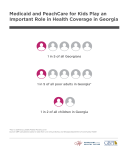
The Georgia Department of Community Health is in the midst of a process to redesign the state’s Medicaid and PeachCare for Kids programs. Together, these two programs cover more than 1.7 million low-income children, families, and disabled Georgians. As advocates for Georgia’s children and for Georgia’s health care consumers, we view this redesign process as an opportunity to strengthen these programs to ensure they provide access to the services that children and families need to live healthy and productive lives.
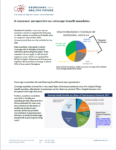


 

The first phase of the Department’s redesign effort, an assessment of the Medicaid landscape in Georgia and in selected states around the country conducted by an outside consulting firm, was recently made public. In addition to a lay of the land, the report featured three major redesign options, each of which would move Georgians with disabilities from fee-for-service into managed care arrangements. There are questions about how well managed care may work for populations with complex health needs, and the Department should work with advocates for these vulnerable Georgia citizens to ensure any redesign system does not disrupt or impede care for this fragile population.

 

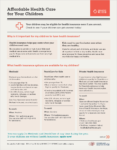
At the same time, we must not lose sight of the children who are already enrolled in managed care through Medicaid and PeachCare for Kids.  Nearly a third of Georgia’s children are covered through these programs, and there are concrete steps that the Department can take now to bolster these programs for the future. We encourage the Department to adopt a best practices approach by focusing on three evidence-based themes as it redesigns these programs for children: first, coverage matters; second, ensuring access to care requires adequate network capacity and accountability; and third, ensuring quality of care requires system coordination.


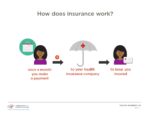
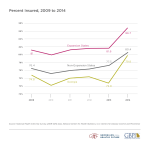
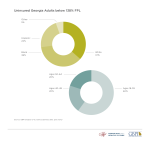
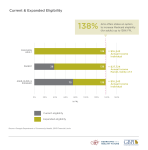
Coverage matters. Numerous studies link continuous health insurance coverage to improved health outcomes. Georgia has made an intentional effort to cover more children in recent years: our uninsured rate for kids has steadily improved from 11 percent in 2008 to 9.8 percent in 2010. Still, about three-quarters of uninsured children in Georgia are eligible for Medicaid or PeachCare for Kids, and by leveraging new enhanced funding opportunities and program flexibilities at the federal level and by borrowing a page from successful initiatives in neighboring states like Alabama, which has reduced its uninsured rate for children to just six percent, we can get closer to the goal of providing health coverage to all of Georgia’s children. For example, Georgia could simplify the eligibility process for children by adopting a policy of 12 months continuous eligibility for kids (currently, some children fall through the cracks with a 6-month renewal policy). There are other administrative and technology system enhancements the Department can take to make it easier for kids to enroll and remain enrolled in coverage, and we encourage the Department to do so.


Ensuring Access to care requires adequate network capacity and accountability. Getting and keeping kids enrolled in Medicaid and PeachCare for Kids is critical, but it is only a first step to ensure that children have appropriate access to a well-coordinated and patient-centered medical home. Significant documented weaknesses in pediatric specialty networks exist in certain regions of the state. Georgia has two policy levers at its disposal to bring these networks up to standard: first, increase provider reimbursement rates for specialty care and second, monitor the contracts with the care management organizations to ensure compliance with policies to establish out-of-network arrangements. Where overall shortages in physician supply hinder access, the Department should work with the care management organizations to explore emerging solutions such as telemedicine, an approach that states like Texas have embraced with some success.


Ensuring quality of care requires system coordination. The Department of Community Health maintains strong quality standards, but performance measures show opportunities for improvement. For example, well-care visits and key screenings are below national averages, and less than half of Georgia’s children with behavioral health needs obtain the care they need. Promising care coordination practices in states like Texas, which uses an electronic health records system to share medical histories and ensure coordinated care for children in the state’s foster care system, and Rhode Island, which utilizes specially trained parent consultants, can inform Georgia’s efforts to develop a more coordinated system of care for children. The Department should also develop and enforce rigorous contracting standards to enhance quality.


We commend the Department of Community Health for its proactive efforts to modernize Medicaid and PeachCare for Kids and encourage best-practices based systems changes that incorporate these three themes. The health of Georgia’s children hangs in the balance.


<

Medicaid Redesign Update

In the on-going efforts to redesign Georgia’s Medicaid and PeachCare programs, the Department of Community Health (DCH)
is continuing to analyze and evaluate its options and has convened three taskforces to gather feedback from consumer advocates, providers and other stakeholders.  The latest taskforce, focused on children and families will hold its first meeting on March 9th.  GHF’s Outreach and Advocacy Director Amanda Ptashkin will be there to represent health care consumers who currently access these programs or who will gain access through the Medicaid expansion in 2014.  Part of the charge of this taskforce includes identifying:


  • Program features identified in the Navigant report that are most/least appealing to meeting the needs of families and children;
  • Current features of the program that should be maintained;
  • Largest unmet need of the current program;
  • Better medical management and coordination for children in foster care;
  • Additional insights not identified in the report; and
  • Identification of critical design features needed to protect the needs of children and families


If you or your organization have thoughts on the above charge, please email Amanda Ptashkin.  To learn more about the redesign process, visit www.healthyfuturega.org/issues/careforgeorgiaskids


<

Opportunity to weigh in with DCH on Medicaid redesign

Over the last several weeks, Navigant, the consulting firm hired by the Georgia Department of Community Health to oversee the Medicaid Redesign assessment, has been conducting focus groups across the state as part of the environmental scan stage of the process.  They have met with providers, consumers, advocates and vendors.  For those throughout the state who were unable to participate in these forums, there has still been an opportunity to share your opinions and suggestions on how to improve our Medicaid and PeachCare system, but time for that feedback is running out.  Currently on the DCH website, there is an online survey for consumers, patients, providers and vendors to weigh in on the process. The survey will close this Friday, November 11. Click here to access the survey.


Here is your opportunity to share your experiences in dealing with Medicaid–what works? what could be improved? how do we ensure adequate access to providers, particularly in rural communities?  The compilation of this information is critical in determining how to redesign our current system to make it work for the most number of Georgians.  Navigant will evaluate the survey responses from all across the state and incorporate them into their recommendations for redesigning the system.  This is an easy opportunity to have a big impact and we hope that you will continue to promote health care coverage, access, and quality that all Georgians deserve.


Once this stage of the redesign process is complete Georgians for a Healthy Future and our partner organizations will work to ensure that consumer health advocates have the information and tools they need to continue to weigh in on this process. In a few days, Georgians for a Healthy Future will launch a web page where we will house timely and relevant information to help advocates like you exercise your voice in this process and we will be sure to notify you when that site goes live.


In the meantime, please take advantage of this opportunity.  Click below on the survey link that applies to you:
Providers
Consumers
Advocates
Vendors


For more information, please visit the DCH website pages for the Medicaid & CHIP Redesign.


Thank you for all you do to ensure a healthy future for all Georgians!
 

<
Nearly two million Georgians are uninsured.Source: CPS data
Georgia’s infant mortality rate is among the worst in the nation.Source: KidsCount
Georgia ranks 38th in health system performance.Source: Commonwealth Fund State Scorecard
2012 is a critical year for health care advocacy--your voice matters!Source: GHF

Contact GHF

place

100 Edgewood Avenue
Suite 815
Atlanta, GA 30303

Phone: 404-567-5016
Fax: 404-935-9885
E-Mail: info@healthyfuturega.org

Connect on Facebook

Connect on Twitter

twitter
© 2009 Georgians For a Healthy Future | All Rights Reserved